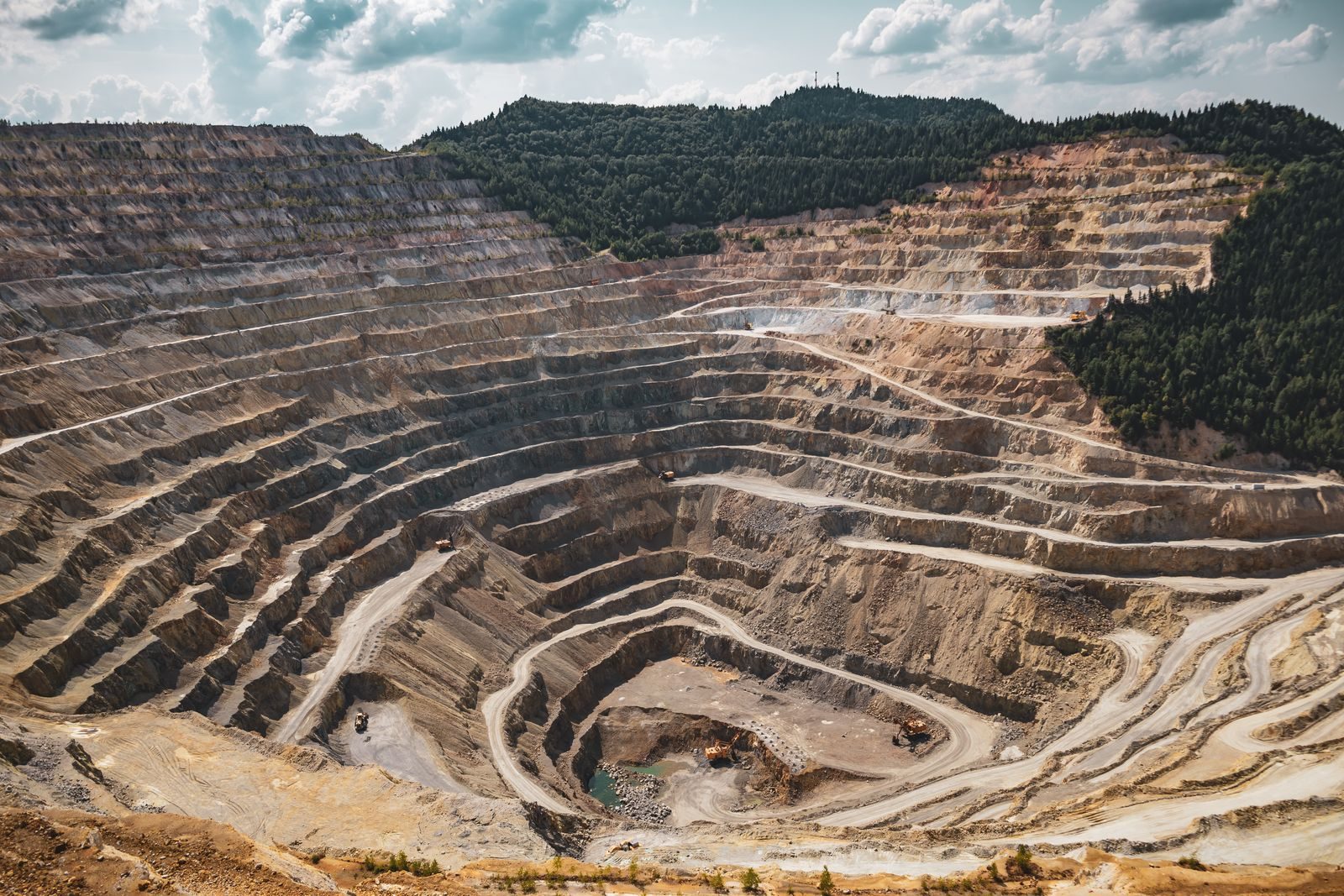
Accounting for mining of lignite: what every SME should know
NOGA code 052000 · MINING AND QUARRYING
Whether you run a Sàrl, an SA or a sole proprietorship, accounting eventually lands on your desk. Here are the practical reference points — legal basis, deadlines and common pitfalls — to decide with a clear head.
The Swiss legal frame for accounting
In Switzerland, the duty to keep accounts stems from art. 957 ff. of the Code of Obligations. Legal entities (Sàrl, SA) and sole proprietorships with at least CHF 500,000 in revenue keep full accounts: balance sheet, income statement and notes. Below that threshold, a simplified record of income, expenses and assets is sufficient.
Art. 957a CO requires complete, truthful and systematic recording of transactions, each entry backed by a supporting document. For accounting, that means in practice: no movement without a receipt, and an audit trail that can be reconstructed at any time — including during a VAT or AHV inspection.
A Swiss SME's accounting calendar
Every deadline has an owner: an obligation “of everyone” is kept by no one. Naming one person per deadline family (VAT, payroll, taxes) closes the gaps.
For accounting, deadline discipline is worth real money: default interest on late VAT, AHV adjustments, tax fines. A shared deadline calendar — fed by up-to-date figures — remains the simplest safeguard.
A well-structured SME chart of accounts
The test of a good chart of accounts is a single question: can the owner find the margins in three clicks? If not, the chart serves the tax office but not the business.
The chart of accounts is also the hinge to VAT: every revenue account carries its rate (8.1%, 2.6%, 3.8% or exempt), every expense account its input-tax right. Set those attributes once in the tool and every subsequent return becomes reliable.
Digitalising accounting: what actually works
Digitising does not mean hoarding PDFs: without the document-entry link, a digital file is as opaque as a box of archives.
A dashboard only has value if the data is fresh: automating data entry means, first of all, buying up-to-date information about your own business.
Outsource accounting or keep it in-house?
Outsourcing accounting to a fiduciary frees up time and secures compliance; keeping it in-house preserves a continuous view and costs less in fees. The best answer is often hybrid: the company captures and digitises as it goes, the fiduciary supervises, closes the books and represents the company before the authorities.
Changing fiduciary is not a drama: the accounting data belongs to the company, and a clean export (entries, chart of accounts, linked documents) allows a transition at year-end. A provider who locks in a client's data says a lot about how it works.
Frequently asked questions
How much does accounting cost in Switzerland?
It depends on document volume, the number of salaries and VAT complexity — no serious figure can be quoted without examining the file. Two levers cut the bill everywhere: digitised, well-filed receipts and software that prepares entries instead of having them re-keyed.
What is the difference between a limited and an ordinary audit?
The ordinary audit applies to companies exceeding, for two consecutive years, two of three thresholds: CHF 20 million balance sheet total, CHF 40 million revenue, 250 full-time positions. Others fall under the limited audit, and those with no more than ten full-time positions on annual average can opt out with all shareholders' consent.
When is entry in the commercial register mandatory?
A Sàrl and an SA only come into existence with their registration. A sole proprietorship must register from CHF 100,000 of annual revenue; below that, registration stays voluntary but adds credibility and protects the business name.
What are the legal obligations for accounting in Switzerland?
The foundation is the Code of Obligations: proper bookkeeping (art. 957a CO), annual accounts (balance sheet, income statement, notes) and 10-year retention of books and records (art. 958f CO). VAT applies from CHF 100,000 of turnover, and social insurance settlements from the first employee.
Professions in the same sector
- Mining of hard coal
- Extraction of crude petroleum
- Extraction of natural gas
- Mining of iron ores
- Mining of uranium and thorium ores
- Mining of other non-ferrous metal ores
- Quarrying of ornamental and building stone, limestone, gypsum, chalk and slate
- Operation of gravel and sand pits; mining of clays and kaolin
- Mining of chemical and fertiliser minerals
- Extraction of peat
- Extraction of salt
- Other mining and quarrying n.e.c.
This guide by municipality
Also worth reading
Switch to accounting that keeps itself up to date
MyFiducia.ai automates accounting for Swiss SMEs: AI-read documents, posting suggestions, VAT and exports ready for your fiduciary. Try the platform or browse our other guides.
The application is operated in French.
Source: NOGA 2008 nomenclature, Swiss Federal Statistical Office (FSO). A statistical nomenclature: it describes an activity and is not a commercial register entry.