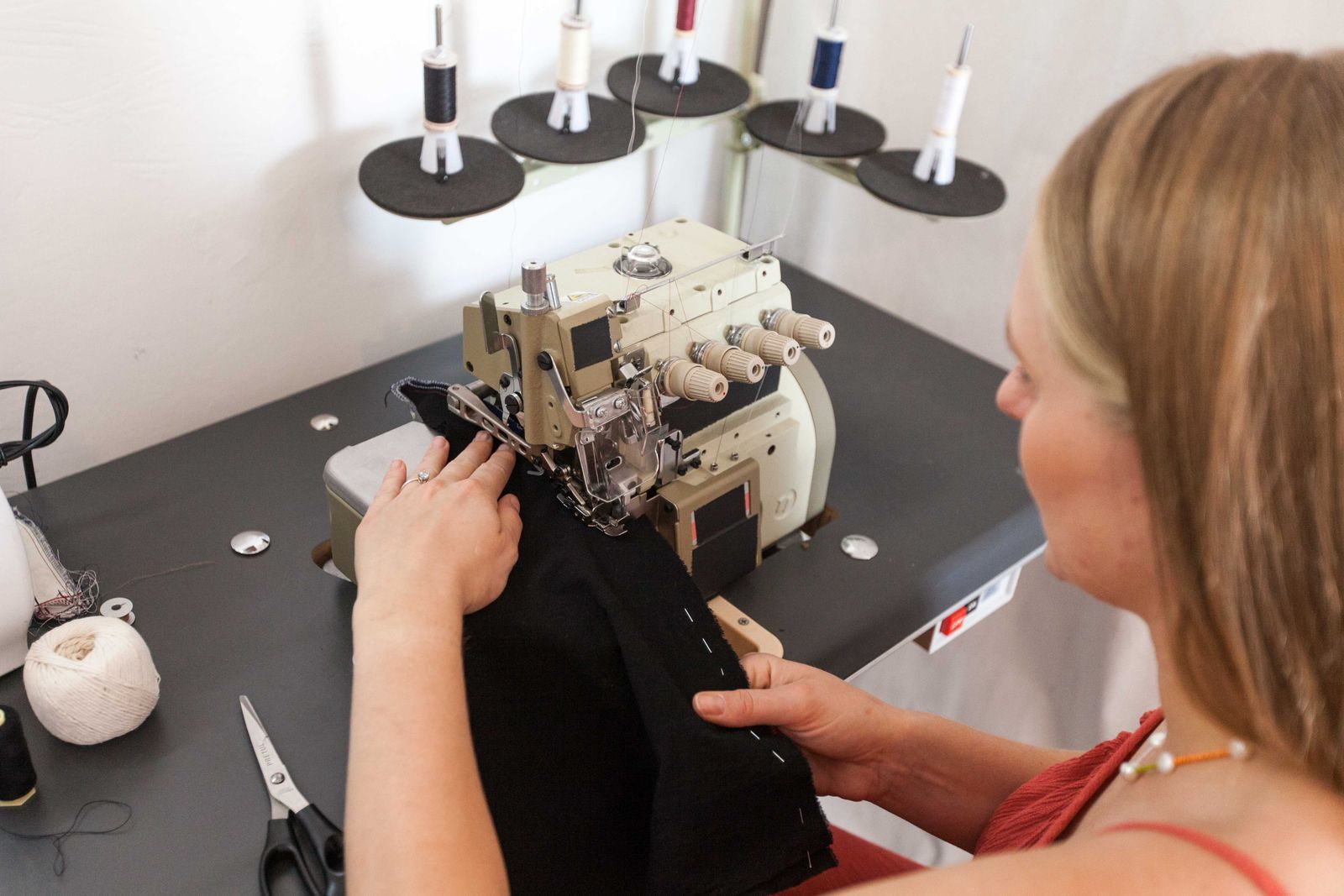
Accounting for manufacture of knitted and crocheted fabrics explained simply
NOGA code 139100 · MANUFACTURING
Delegate, digitalise or do it all yourself? Around accounting, every SME draws its own line. The reference points below — federal law, cantonal practice and lessons from the field — help you place the cursor well.
The Swiss legal frame for accounting
In Switzerland, the duty to keep accounts stems from art. 957 ff. of the Code of Obligations. Legal entities (Sàrl, SA) and sole proprietorships with at least CHF 500,000 in revenue keep full accounts: balance sheet, income statement and notes. Below that threshold, a simplified record of income, expenses and assets is sufficient.
The good news: the Swiss frame is stable and predictable. Structure accounting once — chart of accounts, document flow, calendar — and the same organisation pays off for years.
A Swiss SME's accounting calendar
An accounting calendar only lives if it is shared: owner, in-house bookkeeper and fiduciary must see the same deadlines and the same status.
Delays rarely come alone: neglected bookkeeping postpones the closing, hence the tax return, hence the recalculated instalments — and the business flies blind for months. Keeping the books current as you go is the only sustainable way to hold every cascading deadline.
A well-structured SME chart of accounts
Account labels deserve as much care as numbers: “Third-party fees” says nothing, “Fiduciary fees” and “IT fees” say everything. Meaningful labels cut posting errors and make dashboards readable without a glossary.
Standard numbering also enables automation: stable posting rules (same supplier, same account) make data entry predictable and the audit faster. Avoid changing the chart of accounts mid-year — migrate at the closing date, with a documented mapping table.
Digitalising accounting: what actually works
A serious accounting document archive links every record to its entry, timestamps versions and logs access — exactly what Swiss bookkeeping regulation expects from probative electronic retention. Chronological filing by financial year becomes an automatic by-product.
Migrate in stages: supplier invoices first (high volume, immediate gain), then receivables with the QR-bill, finally payroll and the closing. At each stage, comparing one month before/after is enough to prove the gain — no theoretical promises needed.
Outsource accounting or keep it in-house?
The Swiss fiduciary market is dense and governed by professional practice: industry standards, business secrecy, civil liability. Compare offers on three concrete criteria — exact scope (data entry? closing? payroll? VAT?), a named contact person, and the tools used. It prevents year-end misunderstandings.
Three signals say it is time to delegate more: missed deadlines (VAT, AHV), entries running months behind, or an owner spending evenings on receipts instead of the business. Conversely, an SME equipped with modern software can safely take day-to-day entry back in-house.
Frequently asked questions
What is simplified bookkeeping and who can use it?
Sole proprietorships and partnerships under CHF 500,000 of revenue may limit themselves to recording income, expenses and assets (art. 957 para. 2 CO). Once over the threshold — or upon founding a Sàrl or an SA — full accounts with balance sheet, income statement and notes become mandatory.
Which documents should be prepared for the year-end closing?
Bank and cash statements at the closing date, the inventory of stock and work in progress, final AHV/LPP/accident settlements, contracts signed or amended during the year, invoices straddling two years and the detail of accruals. With an up-to-date document archive, most of it is already there.
What is the difference between a limited and an ordinary audit?
The ordinary audit applies to companies exceeding, for two consecutive years, two of three thresholds: CHF 20 million balance sheet total, CHF 40 million revenue, 250 full-time positions. Others fall under the limited audit, and those with no more than ten full-time positions on annual average can opt out with all shareholders' consent.
How long must records related to accounting be kept?
Ten years from the end of the financial year concerned (art. 958f CO). Electronic retention is permitted if the integrity and readability of the records are guaranteed — a serious digital archive validly replaces paper binders.
Professions in the same sector
- Production and preserving of meat (except poultry meat)
- Production and preserving of poultry meat
- Production of meat and poultry meat products
- Processing and preserving of fish, crustaceans and molluscs
- Processing and preserving of potatoes
- Manufacture of fruit and vegetable juice
- Other processing and preserving of fruit and vegetables
- Manufacture of oils and fats
- Manufacture of margarine and similar edible fats
- Manufacture of fresh dairy products
- Manufacture of cheese
- Other milk processing
This guide by municipality
Also worth reading
Switch to accounting that keeps itself up to date
MyFiducia.ai automates accounting for Swiss SMEs: AI-read documents, posting suggestions, VAT and exports ready for your fiduciary. Try the platform or browse our other guides.
The application is operated in French.
Source: NOGA 2008 nomenclature, Swiss Federal Statistical Office (FSO). A statistical nomenclature: it describes an activity and is not a commercial register entry.