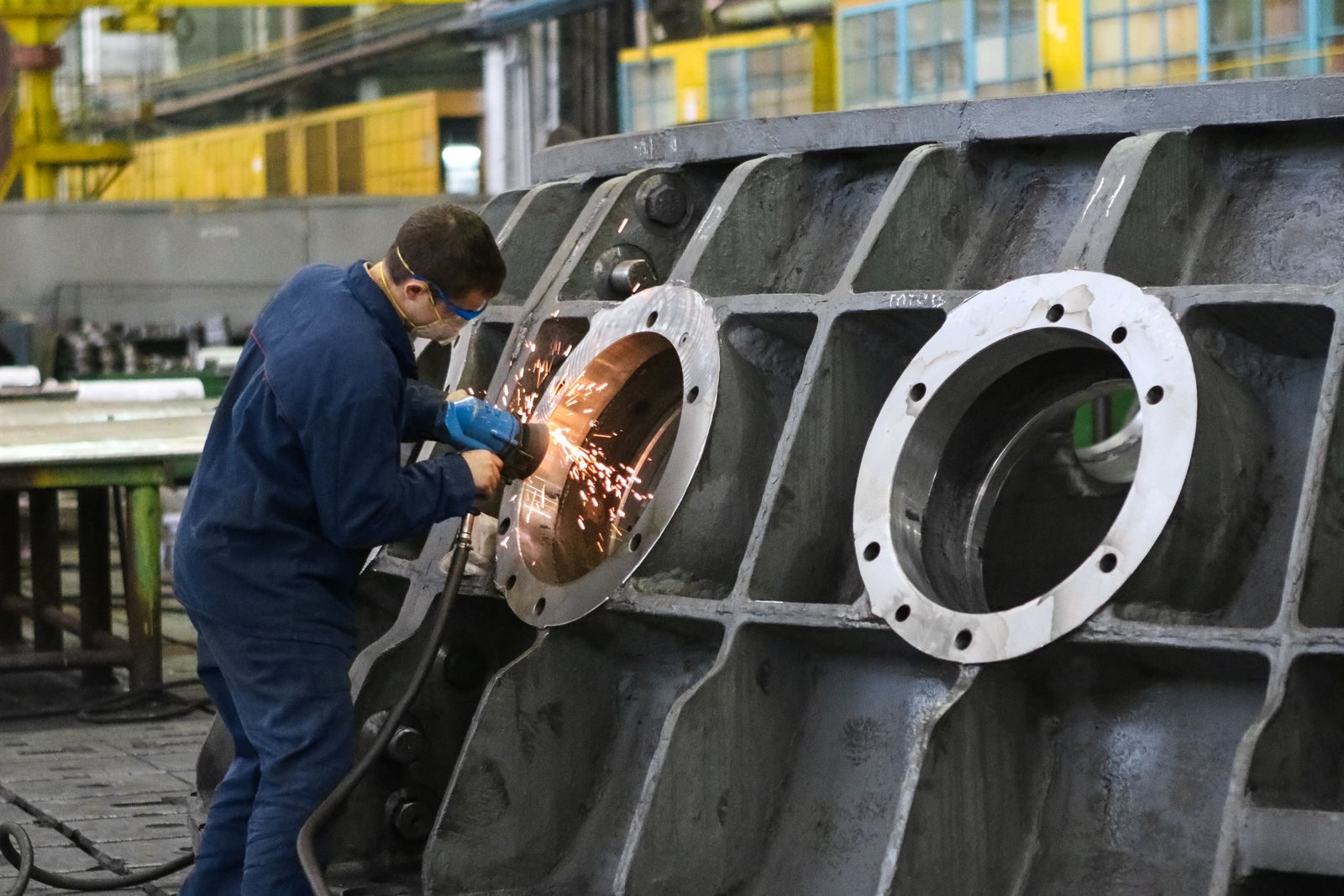
Accounting for manufacture of machinery for metallurgy: what every SME should know
NOGA code 289100 · MANUFACTURING
Delegate, digitalise or do it all yourself? Around accounting, every SME draws its own line. The reference points below — federal law, cantonal practice and lessons from the field — help you place the cursor well.
The Swiss legal frame for accounting
Responsibility for the books is personal: in an SA, organising the accounting is one of the board's non-transferable duties (art. 716a CO); in a Sàrl, the managing directors carry the same duty. Outsourcing the execution never transfers that underlying responsibility.
The good news: the Swiss frame is stable and predictable. Structure accounting once — chart of accounts, document flow, calendar — and the same organisation pays off for years.
A well-structured SME chart of accounts
Account labels deserve as much care as numbers: “Third-party fees” says nothing, “Fiduciary fees” and “IT fees” say everything. Meaningful labels cut posting errors and make dashboards readable without a glossary.
For accounting, the right granularity is decisive: enough accounts to steer the business (margins by activity, expenses by nature), few enough that every entry finds its place without hesitation. The VAT accounts (input VAT, VAT due) deserve special care — they are the basis of the annual reconciliation.
Digitalising accounting: what actually works
Access for the fiduciary, the auditor and employees is set by roles: view, enter, approve, close. Well-set rights protect the data and speed up collaboration.
A dashboard only has value if the data is fresh: automating data entry means, first of all, buying up-to-date information about your own business.
Outsource accounting or keep it in-house?
A fiduciary's cost depends first on the quality of the data received: digitised, filed, reconciled documents are processed fast; a box of loose receipts is billed by the hour. Improving the internal preparation of accounting lowers fees more surely than any negotiation.
You can combine the models: internal day-to-day entry, monthly external supervision, closing and taxes with the specialist — accounting splits very well.
A Swiss SME's accounting calendar
Three families of deadlines shape the year: federal (VAT within 60 days, salary declaration in January), cantonal (tax return, extensions depending on the canton) and internal (closing, general meeting within six months). Mixing them up is the leading cause of delays.
Delays rarely come alone: neglected bookkeeping postpones the closing, hence the tax return, hence the recalculated instalments — and the business flies blind for months. Keeping the books current as you go is the only sustainable way to hold every cascading deadline.
Frequently asked questions
Does MyFiducia.ai work for a business anywhere in Switzerland?
Yes: the platform runs online, the rules applied are federal (VAT, CO, AHV), and the file can be shared with any fiduciary. Cantonal specifics (taxes, allowances) are configured in your file.
What are the legal obligations for accounting in Switzerland?
The foundation is the Code of Obligations: proper bookkeeping (art. 957a CO), annual accounts (balance sheet, income statement, notes) and 10-year retention of books and records (art. 958f CO). VAT applies from CHF 100,000 of turnover, and social insurance settlements from the first employee.
What are the current Swiss VAT rates?
Since 1 January 2024: 8.1% (standard), 2.6% (reduced — for example food and medicines) and 3.8% (accommodation). Returns must be filed and paid within 60 days after the period ends (quarterly under the effective method, semi-annually under the net tax rate method).
Can accounting be automated with AI?
Largely, yes: automatic document reading, posting suggestions, bank reconciliation via QR references and VAT exports. Human approval remains essential — AI prepares, the professional checks. That is exactly how MyFiducia.ai approaches accounting.
Professions in the same sector
- Production and preserving of meat (except poultry meat)
- Production and preserving of poultry meat
- Production of meat and poultry meat products
- Processing and preserving of fish, crustaceans and molluscs
- Processing and preserving of potatoes
- Manufacture of fruit and vegetable juice
- Other processing and preserving of fruit and vegetables
- Manufacture of oils and fats
- Manufacture of margarine and similar edible fats
- Manufacture of fresh dairy products
- Manufacture of cheese
- Other milk processing
This guide by municipality
Also worth reading
Switch to accounting that keeps itself up to date
MyFiducia.ai automates accounting for Swiss SMEs: AI-read documents, posting suggestions, VAT and exports ready for your fiduciary. Try the platform or browse our other guides.
The application is operated in French.
Source: NOGA 2008 nomenclature, Swiss Federal Statistical Office (FSO). A statistical nomenclature: it describes an activity and is not a commercial register entry.