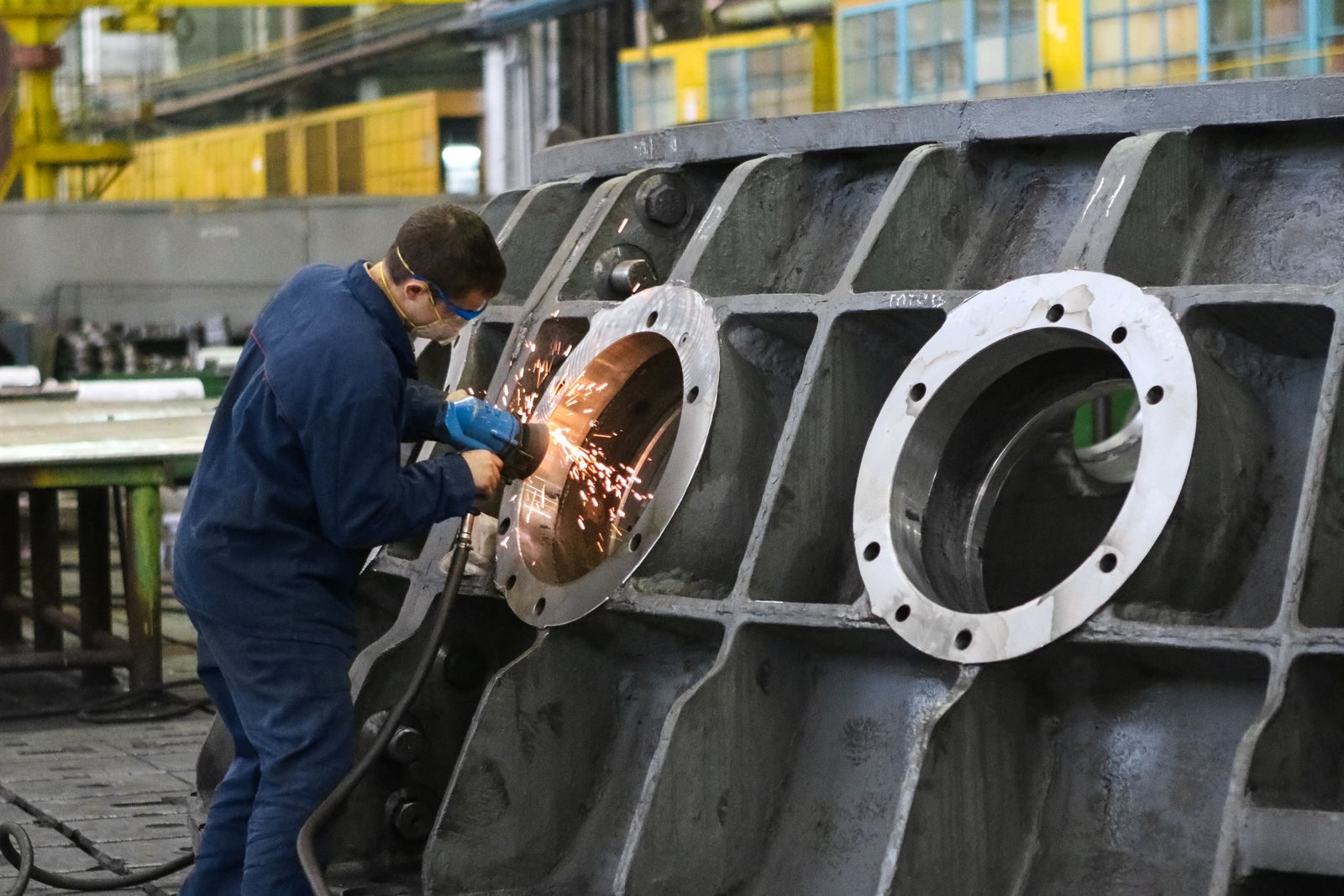
Accounting for manufacture of plastic and rubber machinery explained simply
NOGA code 289600 · MANUFACTURING
Whether you run a Sàrl, an SA or a sole proprietorship, accounting eventually lands on your desk. Here are the practical reference points — legal basis, deadlines and common pitfalls — to decide with a clear head.
The Swiss legal frame for accounting
Responsibility for the books is personal: in an SA, organising the accounting is one of the board's non-transferable duties (art. 716a CO); in a Sàrl, the managing directors carry the same duty. Outsourcing the execution never transfers that underlying responsibility.
One simple principle drives accounting: every franc in or out must be explainable by a document, an entry and an account. All of Swiss accounting law fits inside that traceability requirement.
Outsource accounting or keep it in-house?
Responsibility stays with the client: the fiduciary executes with care, but the signed accounts bind the company. Understanding what you sign is not optional.
For accounting, the internal-external duo works when both sides see the same file: same entries, same documents, same deadlines. Misunderstandings are born from parallel copies.
A Swiss SME's accounting calendar
Every deadline has an owner: an obligation “of everyone” is kept by no one. Naming one person per deadline family (VAT, payroll, taxes) closes the gaps.
Handing deadline monitoring to a tool is no luxury: automatic reminders, a status per obligation, and an “all green” view that clears the mind. What matters is not who ticks the box — but that the box exists and everyone can see it.
A well-structured SME chart of accounts
A good chart of accounts tells the story of the business: classes 1 and 2 describe what it owns and owes, class 3 what it sells, classes 4 to 6 what it consumes. Private accounts (sole proprietorships) and shareholder current accounts (Sàrl/SA) must stay spotless: they are the first thing examined in a tax audit.
The chart of accounts is also the hinge to VAT: every revenue account carries its rate (8.1%, 2.6%, 3.8% or exempt), every expense account its input-tax right. Set those attributes once in the tool and every subsequent return becomes reliable.
Digitalising accounting: what actually works
Accounting digitalisation always follows the same path: capture documents at the source (photo or PDF upload), let automatic recognition extract supplier, amount, date and VAT, approve the proposed entries, then archive each document linked to its entry. Every step removes a re-keying — and therefore an error source.
For accounting, migrating history must not block the start: begin on day one of the current financial year and import the history later if needed.
Frequently asked questions
Which documents should be prepared for the year-end closing?
Bank and cash statements at the closing date, the inventory of stock and work in progress, final AHV/LPP/accident settlements, contracts signed or amended during the year, invoices straddling two years and the detail of accruals. With an up-to-date document archive, most of it is already there.
Can accounting be automated with AI?
Largely, yes: automatic document reading, posting suggestions, bank reconciliation via QR references and VAT exports. Human approval remains essential — AI prepares, the professional checks. That is exactly how MyFiducia.ai approaches accounting.
What are the legal obligations for accounting in Switzerland?
The foundation is the Code of Obligations: proper bookkeeping (art. 957a CO), annual accounts (balance sheet, income statement, notes) and 10-year retention of books and records (art. 958f CO). VAT applies from CHF 100,000 of turnover, and social insurance settlements from the first employee.
Does MyFiducia.ai work for a business anywhere in Switzerland?
Yes: the platform runs online, the rules applied are federal (VAT, CO, AHV), and the file can be shared with any fiduciary. Cantonal specifics (taxes, allowances) are configured in your file.
Professions in the same sector
- Production and preserving of meat (except poultry meat)
- Production and preserving of poultry meat
- Production of meat and poultry meat products
- Processing and preserving of fish, crustaceans and molluscs
- Processing and preserving of potatoes
- Manufacture of fruit and vegetable juice
- Other processing and preserving of fruit and vegetables
- Manufacture of oils and fats
- Manufacture of margarine and similar edible fats
- Manufacture of fresh dairy products
- Manufacture of cheese
- Other milk processing
This guide by municipality
Also worth reading
Switch to accounting that keeps itself up to date
MyFiducia.ai automates accounting for Swiss SMEs: AI-read documents, posting suggestions, VAT and exports ready for your fiduciary. Try the platform or browse our other guides.
The application is operated in French.
Source: NOGA 2008 nomenclature, Swiss Federal Statistical Office (FSO). A statistical nomenclature: it describes an activity and is not a commercial register entry.