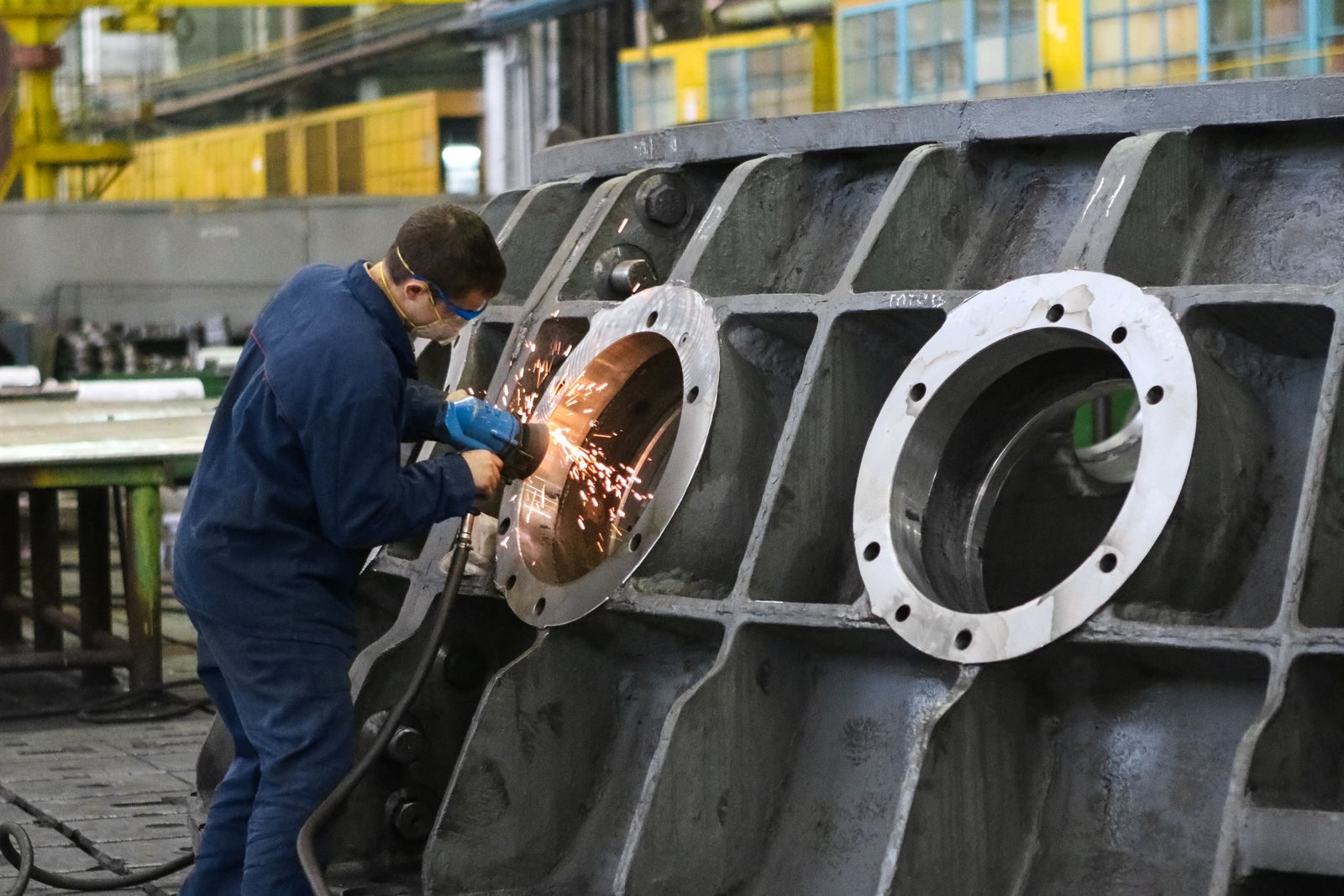
Accounting for forging, pressing, stamping and roll-forming of metal; powder metallurgy: what every SME should know
NOGA code 255000 · MANUFACTURING
Accounting for forging, pressing, stamping and roll-forming of metal; powder metallurgy rests on three pillars: federal law that applies across Switzerland, cantonal deadlines worth knowing, and tools that eliminate re-keying. This guide puts it all in order, fact by fact.
The Swiss legal frame for accounting
AHV audits and VAT audits follow the same logic: start from the documents, trace to the entries, check consistency. A business with a clean audit trail sails through these exercises.
Art. 957a CO requires complete, truthful and systematic recording of transactions, each entry backed by a supporting document. For accounting, that means in practice: no movement without a receipt, and an audit trail that can be reconstructed at any time — including during a VAT or AHV inspection.
Digitalising accounting: what actually works
Artificial intelligence has changed the economics of accounting: automatic invoice reading reaches recognition rates that make manual entry marginal, and posting suggestions learn from corrections. The accountant does not disappear — the job shifts from data entry to control and advice.
The real gain of digitalised accounting shows day to day: no paper pile at month-end, VAT prepared continuously, and an owner reading today's figures rather than last quarter's.
Outsource accounting or keep it in-house?
Responsibility stays with the client: the fiduciary executes with care, but the signed accounts bind the company. Understanding what you sign is not optional.
You can combine the models: internal day-to-day entry, monthly external supervision, closing and taxes with the specialist — accounting splits very well.
A Swiss SME's accounting calendar
The professionals' trick: handle every deadline at D-30, not D-1. A VAT return prepared a month early leaves time to chase a missing document without penalty.
For accounting, year-end is prepared in October: last invoices, investment decisions, provisions to assess — December is too late to act, January is for recording.
A well-structured SME chart of accounts
A good chart of accounts tells the story of the business: classes 1 and 2 describe what it owns and owes, class 3 what it sells, classes 4 to 6 what it consumes. Private accounts (sole proprietorships) and shareholder current accounts (Sàrl/SA) must stay spotless: they are the first thing examined in a tax audit.
Suspense accounts (to clarify) are useful provided they are emptied monthly: a swelling “miscellaneous” account is the classic symptom of a chart that no longer fits the activity.
Frequently asked questions
What is simplified bookkeeping and who can use it?
Sole proprietorships and partnerships under CHF 500,000 of revenue may limit themselves to recording income, expenses and assets (art. 957 para. 2 CO). Once over the threshold — or upon founding a Sàrl or an SA — full accounts with balance sheet, income statement and notes become mandatory.
What is the difference between a limited and an ordinary audit?
The ordinary audit applies to companies exceeding, for two consecutive years, two of three thresholds: CHF 20 million balance sheet total, CHF 40 million revenue, 250 full-time positions. Others fall under the limited audit, and those with no more than ten full-time positions on annual average can opt out with all shareholders' consent.
Which documents should be prepared for the year-end closing?
Bank and cash statements at the closing date, the inventory of stock and work in progress, final AHV/LPP/accident settlements, contracts signed or amended during the year, invoices straddling two years and the detail of accruals. With an up-to-date document archive, most of it is already there.
Effective VAT method or net tax rate: how to choose?
The effective method deducts actual input VAT and files quarterly; the net tax rate method applies a flat industry rate to turnover, semi-annually, with no separate input VAT deduction. The flat rate suits low-cost structures; as investments grow, the effective method usually wins again.
Professions in the same sector
- Production and preserving of meat (except poultry meat)
- Production and preserving of poultry meat
- Production of meat and poultry meat products
- Processing and preserving of fish, crustaceans and molluscs
- Processing and preserving of potatoes
- Manufacture of fruit and vegetable juice
- Other processing and preserving of fruit and vegetables
- Manufacture of oils and fats
- Manufacture of margarine and similar edible fats
- Manufacture of fresh dairy products
- Manufacture of cheese
- Other milk processing
This guide by municipality
Also worth reading
Switch to accounting that keeps itself up to date
MyFiducia.ai automates accounting for Swiss SMEs: AI-read documents, posting suggestions, VAT and exports ready for your fiduciary. Try the platform or browse our other guides.
The application is operated in French.
Source: NOGA 2008 nomenclature, Swiss Federal Statistical Office (FSO). A statistical nomenclature: it describes an activity and is not a commercial register entry.