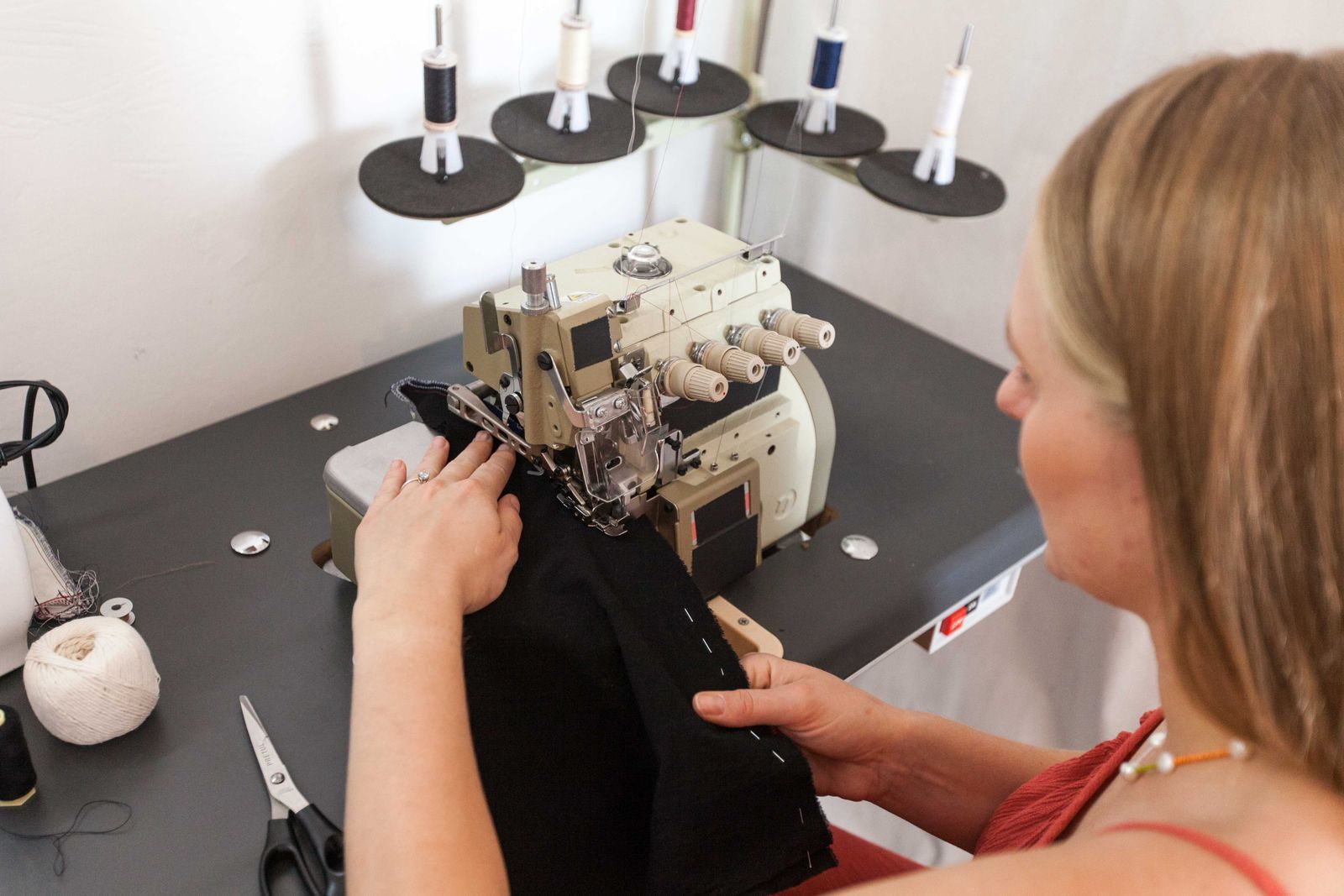
Accounting for preparation and spinning of other textile fibres: rules, deadlines, best practice
NOGA code 131004 · MANUFACTURING
Accounting for preparation and spinning of other textile fibres rests on three pillars: federal law that applies across Switzerland, cantonal deadlines worth knowing, and tools that eliminate re-keying. This guide puts it all in order, fact by fact.
The Swiss legal frame for accounting
AHV audits and VAT audits follow the same logic: start from the documents, trace to the entries, check consistency. A business with a clean audit trail sails through these exercises.
Art. 957a CO requires complete, truthful and systematic recording of transactions, each entry backed by a supporting document. For accounting, that means in practice: no movement without a receipt, and an audit trail that can be reconstructed at any time — including during a VAT or AHV inspection.
A Swiss SME's accounting calendar
The typical annual cycle: monthly or quarterly AHV instalments, VAT returns (quarterly under the effective method, semi-annual under the net tax rate), the final salary declaration in January, closing in the first half-year, then the tax return and the annual VAT reconciliation. Each link depends on the quality of the previous one.
For accounting, year-end is prepared in October: last invoices, investment decisions, provisions to assess — December is too late to act, January is for recording.
A well-structured SME chart of accounts
Nearly all Swiss SMEs rely on the standard SME chart of accounts (Sterchi/Käfer): classes 1 (assets) to 9 (closing), with revenue in class 3 and expenses in classes 4 to 6. Using this standard structure makes conversations with your fiduciary, auditor and tax administration far easier.
Comparability over time beats sophistication: a chart stable for five years beats a “perfect” one rebuilt every year. Banks and the tax administration read year-on-year movements first.
Digitalising accounting: what actually works
Digitising does not mean hoarding PDFs: without the document-entry link, a digital file is as opaque as a box of archives.
The selection criterion for a tool is not the length of its feature list but the robustness of the daily flow: reliable bank imports, VAT computed correctly (8.1 / 2.6 / 3.8%), a complete audit trail from document to entry, and a clean export for the auditor or fiduciary. Everything else is secondary.
Outsource accounting or keep it in-house?
The scope goes down in writing: who enters data, who approves payments, who answers the tax office, who keeps the originals. Every “we'll see” at the start becomes a December misunderstanding.
For accounting, the internal-external duo works when both sides see the same file: same entries, same documents, same deadlines. Misunderstandings are born from parallel copies.
Frequently asked questions
Do you need a fiduciary for accounting, or can you do it yourself?
Both are defensible. Below CHF 500,000 of revenue, a sole proprietorship may keep simplified accounts itself. As soon as payroll, VAT and a closing with tax stakes are involved, professional support prevents mistakes that cost more than the fees.
What is simplified bookkeeping and who can use it?
Sole proprietorships and partnerships under CHF 500,000 of revenue may limit themselves to recording income, expenses and assets (art. 957 para. 2 CO). Once over the threshold — or upon founding a Sàrl or an SA — full accounts with balance sheet, income statement and notes become mandatory.
When must a business register for VAT?
As soon as its worldwide annual turnover reaches CHF 100,000 (CHF 250,000 for non-profit sports or cultural associations). Below that, voluntary registration remains possible and often makes sense to reclaim input VAT on investments.
What is the difference between a limited and an ordinary audit?
The ordinary audit applies to companies exceeding, for two consecutive years, two of three thresholds: CHF 20 million balance sheet total, CHF 40 million revenue, 250 full-time positions. Others fall under the limited audit, and those with no more than ten full-time positions on annual average can opt out with all shareholders' consent.
Professions in the same sector
- Production and preserving of meat (except poultry meat)
- Production and preserving of poultry meat
- Production of meat and poultry meat products
- Processing and preserving of fish, crustaceans and molluscs
- Processing and preserving of potatoes
- Manufacture of fruit and vegetable juice
- Other processing and preserving of fruit and vegetables
- Manufacture of oils and fats
- Manufacture of margarine and similar edible fats
- Manufacture of fresh dairy products
- Manufacture of cheese
- Other milk processing
This guide by municipality
Also worth reading
Switch to accounting that keeps itself up to date
MyFiducia.ai automates accounting for Swiss SMEs: AI-read documents, posting suggestions, VAT and exports ready for your fiduciary. Try the platform or browse our other guides.
The application is operated in French.
Source: NOGA 2008 nomenclature, Swiss Federal Statistical Office (FSO). A statistical nomenclature: it describes an activity and is not a commercial register entry.