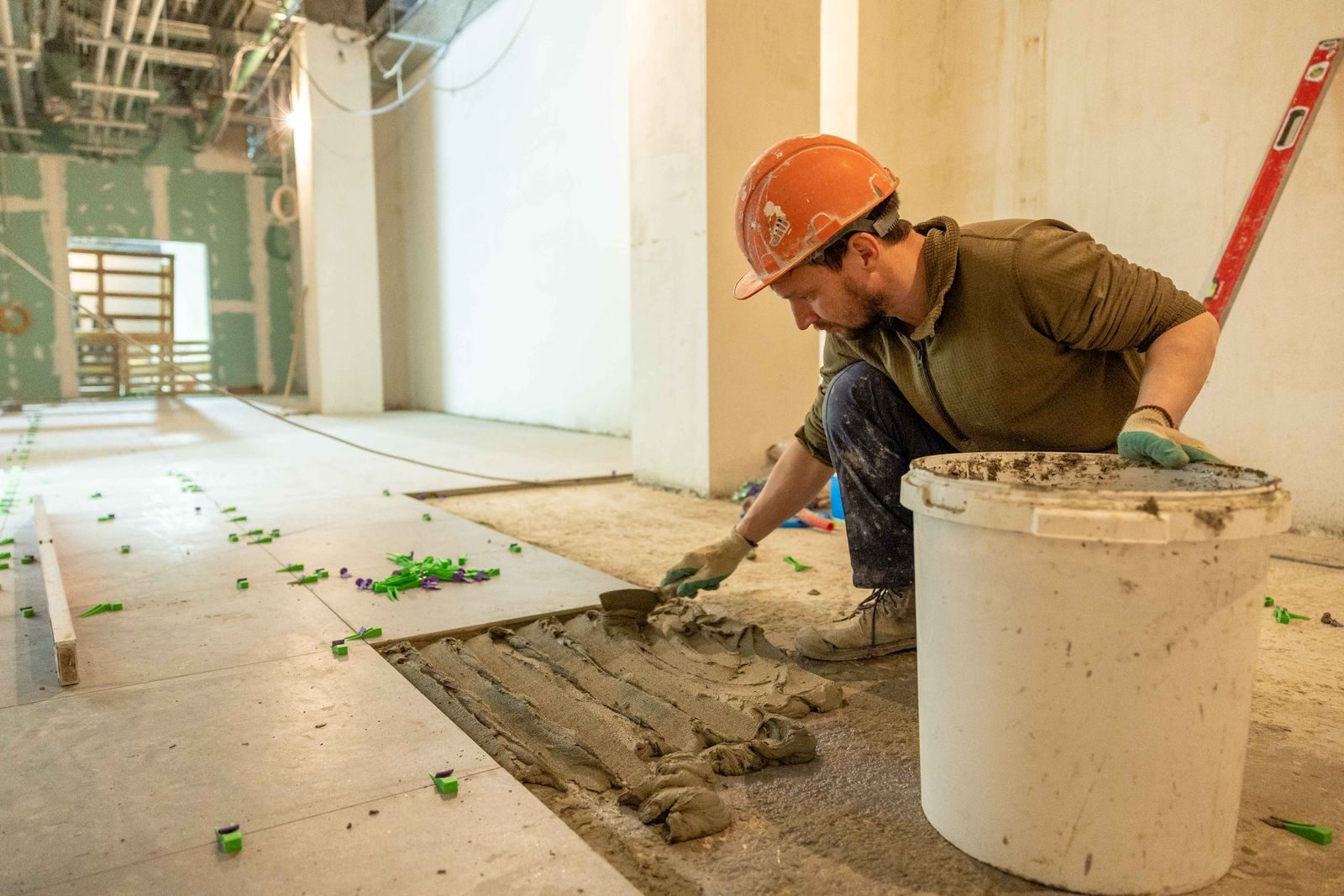
Accounting for laying of floor coverings without the stress: how it works
NOGA code 433301 · CONSTRUCTION
Between VAT, social contributions and the year-end close, a Swiss SME juggles dozens of deadlines a year. This page focuses on accounting: what the law requires, what can be automated, and when to delegate.
The Swiss legal frame for accounting
In Switzerland, the duty to keep accounts stems from art. 957 ff. of the Code of Obligations. Legal entities (Sàrl, SA) and sole proprietorships with at least CHF 500,000 in revenue keep full accounts: balance sheet, income statement and notes. Below that threshold, a simplified record of income, expenses and assets is sufficient.
The annual accounts (art. 958 CO) consist of the balance sheet, the income statement and the notes; they must be drawn up within six months of the year-end so the general meeting can approve them. A delay here cascades into the tax return and the final social insurance settlements.
Outsource accounting or keep it in-house?
A good test before choosing: ask the fiduciary HOW it wants to receive the documents. A precise answer (formats, frequency, platform) says more than any brochure.
With a shared online platform, collaboration works remotely, documents and entries visible to both sides in real time. The choice widens to all of Switzerland — competence becomes the criterion again, not the postcode.
A Swiss SME's accounting calendar
Tax instalments are steered: too low, they set up a salty final bill; too high, they tie up cash. Adjusting them on current figures is a profitable reflex.
The useful reflex: date every obligation the moment it arises. An employee hired means AHV/LPP deadlines created; VAT registration means a filing cycle set; a closing date fixed means backward planning of the close. Well organised, the accounting calendar fills itself.
A well-structured SME chart of accounts
Nearly all Swiss SMEs rely on the standard SME chart of accounts (Sterchi/Käfer): classes 1 (assets) to 9 (closing), with revenue in class 3 and expenses in classes 4 to 6. Using this standard structure makes conversations with your fiduciary, auditor and tax administration far easier.
Comparability over time beats sophistication: a chart stable for five years beats a “perfect” one rebuilt every year. Banks and the tax administration read year-on-year movements first.
Digitalising accounting: what actually works
Accounting digitalisation always follows the same path: capture documents at the source (photo or PDF upload), let automatic recognition extract supplier, amount, date and VAT, approve the proposed entries, then archive each document linked to its entry. Every step removes a re-keying — and therefore an error source.
The selection criterion for a tool is not the length of its feature list but the robustness of the daily flow: reliable bank imports, VAT computed correctly (8.1 / 2.6 / 3.8%), a complete audit trail from document to entry, and a clean export for the auditor or fiduciary. Everything else is secondary.
Frequently asked questions
What are the legal obligations for accounting in Switzerland?
The foundation is the Code of Obligations: proper bookkeeping (art. 957a CO), annual accounts (balance sheet, income statement, notes) and 10-year retention of books and records (art. 958f CO). VAT applies from CHF 100,000 of turnover, and social insurance settlements from the first employee.
When must a business register for VAT?
As soon as its worldwide annual turnover reaches CHF 100,000 (CHF 250,000 for non-profit sports or cultural associations). Below that, voluntary registration remains possible and often makes sense to reclaim input VAT on investments.
Can accounting be automated with AI?
Largely, yes: automatic document reading, posting suggestions, bank reconciliation via QR references and VAT exports. Human approval remains essential — AI prepares, the professional checks. That is exactly how MyFiducia.ai approaches accounting.
What is simplified bookkeeping and who can use it?
Sole proprietorships and partnerships under CHF 500,000 of revenue may limit themselves to recording income, expenses and assets (art. 957 para. 2 CO). Once over the threshold — or upon founding a Sàrl or an SA — full accounts with balance sheet, income statement and notes become mandatory.
Professions in the same sector
- Development of building projects
- General construction of buildings
- General contractor work in building construction
- General building construction and civil engineering works n.e.c.
- Building maintenance and repair work
- Construction of roads and motorways
- Construction of railways and underground railways
- Construction of bridges and tunnels
- Construction of utility projects for fluids
- Construction of utility projects for electricity and telecommunications
- Construction of water projects
- Construction of other civil engineering projects n.e.c.
This guide by municipality
Also worth reading
Switch to accounting that keeps itself up to date
MyFiducia.ai automates accounting for Swiss SMEs: AI-read documents, posting suggestions, VAT and exports ready for your fiduciary. Try the platform or browse our other guides.
The application is operated in French.
Source: NOGA 2008 nomenclature, Swiss Federal Statistical Office (FSO). A statistical nomenclature: it describes an activity and is not a commercial register entry.